- Square nuts grip better and resist loosening under vibration than hex nuts.
- Stainless steel square nuts resist rust, making them ideal for outdoor and marine use.
- Square nuts use includes woodworking, railway tracks, and structural steel.
- Choosing fastener components depends on torque, contact area, and environment.
- Webber Crimpex manufactures precision square nuts as part of its fastening solutions range.
What Makes Square Nuts Different
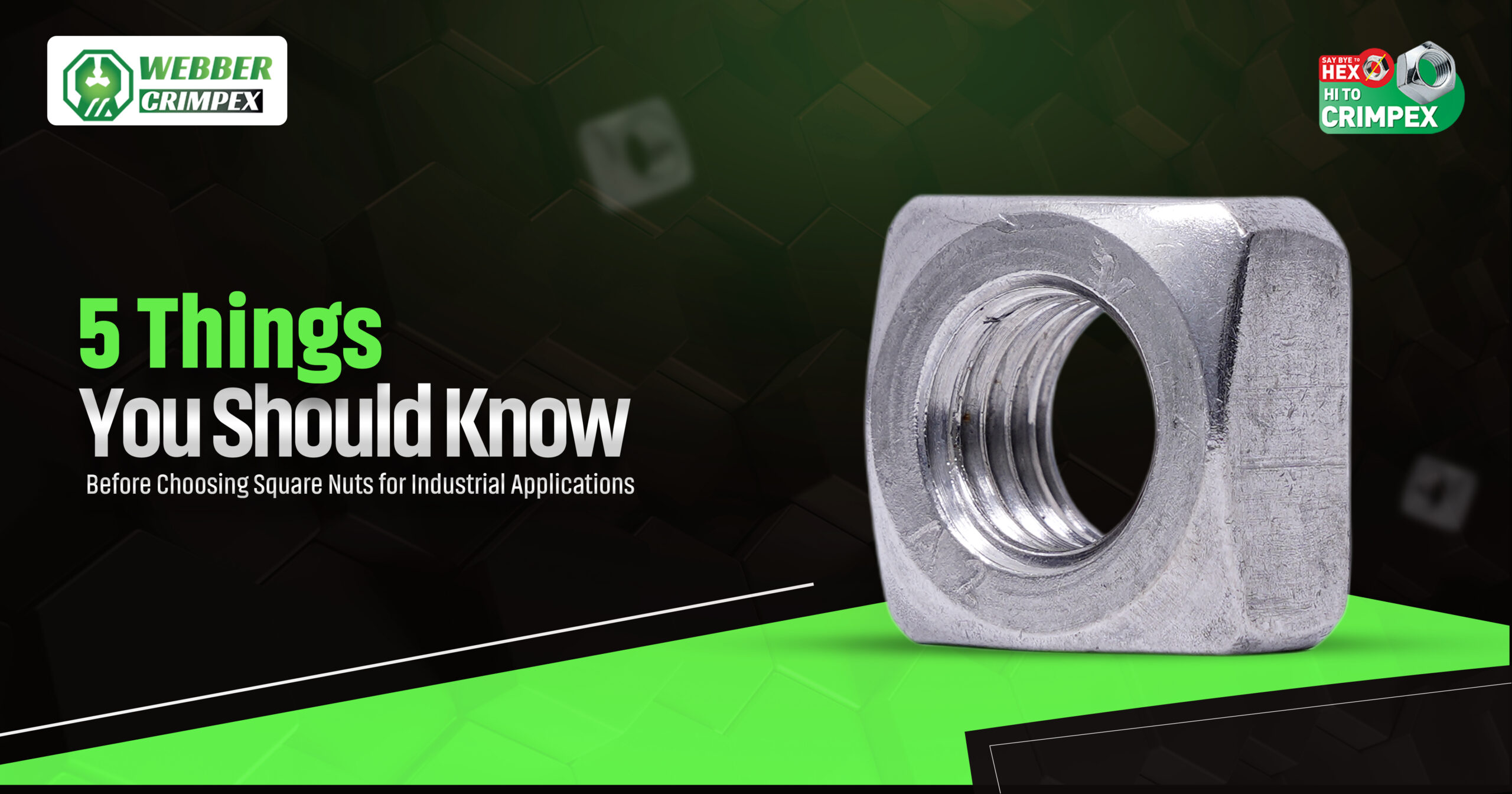
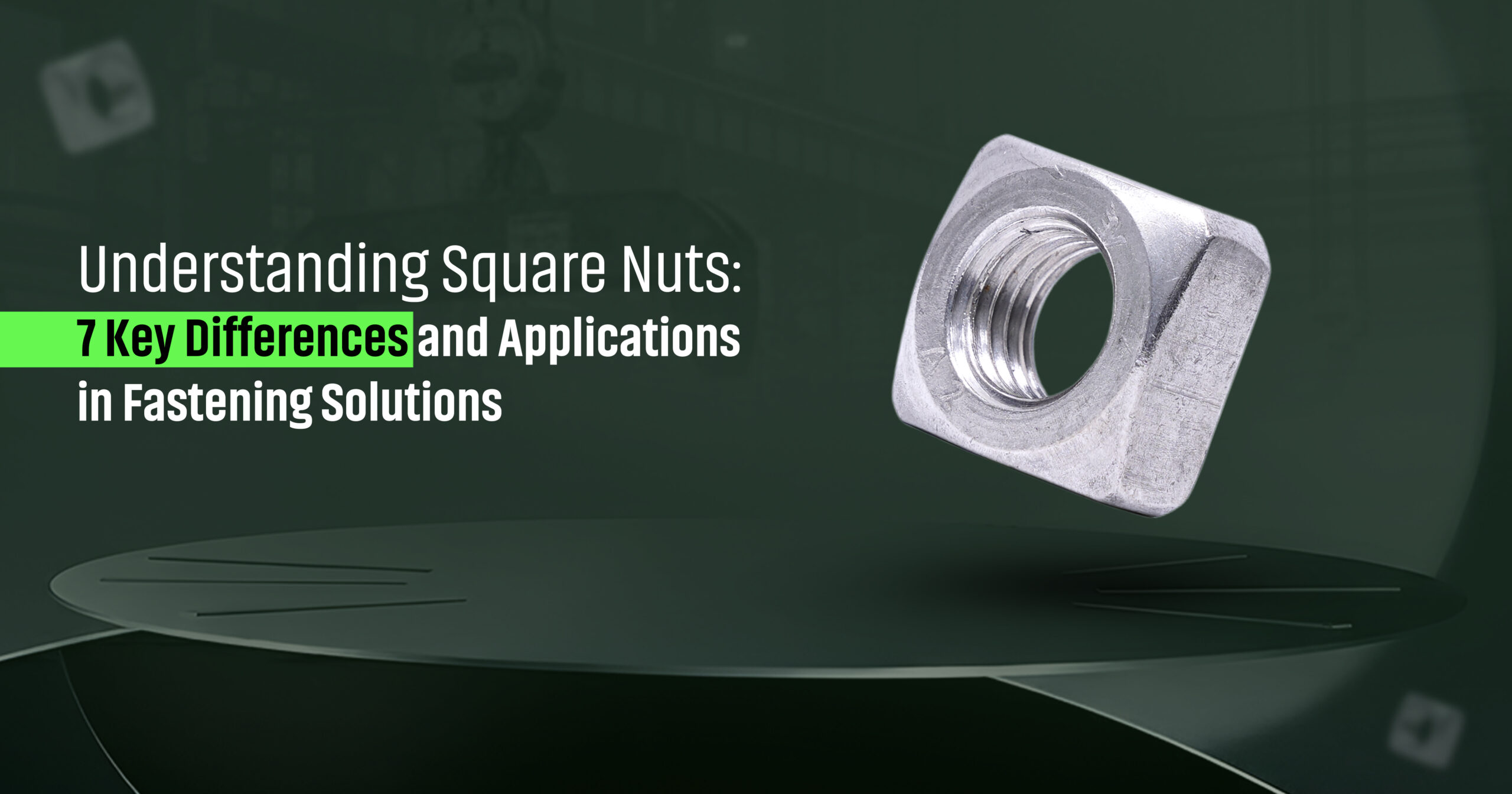
On the surface, you might think a square nut is just a slightly different-looking hex nut. But actually, the differences lie in more than just the shape. For more than 100 years, square nuts have been used in fastening systems, especially in places where a strong grip and flat wrenching surface are more important than a neat finish. Their four sides allow the force to be spread more evenly over a larger area compared with the six sides of a hex nut.
That larger contact area is one of the main reasons why square nuts are still being used in heavy-duty fastening scenarios these days. The flat sides of the square nut can bite into the surface of the adjacent layer, whether it is wood or soft metal, which means the nut is less likely to turn and loosen when subjected to vibration.
Seven Key Differences Between Square Nuts and Other Fasteners
1. Surface Contact Area
The grip against wood, sheet metal, or uneven surfaces is improved by the larger flat surface provided by a square nut on each of its sides.
2. Resistance to Rotation
The shape makes it harder for the nut to rotate after it has been tightened, so it is suitable for areas constantly vibrating.
3. Tooling Requirements
To fit a square nut, the wrench needs a wider jaw than needed for a hex nut, which can even be done by standard 6-point tools.
4. Material Composition
The stainless steel variants of square nuts are good for resisting corrosion and moisture, whereas carbon steel ones can be a good choice for indoor use with low exposure to elements.
5. Load Distribution
Having flat sides enables the nuts to apply the force to the surface very evenly, which means that the damage to the soft materials is minimal.
6. Application Specificity
Hex nuts are versatile parts of the fastening system component, while square nuts are more focused on specialized uses such as track bolts or woodworking joints.
7. Manufacturing Precision
Making the best square nuts needs to be done with very precise measurements for the thread engagement and consistent surface flatness.
Why Stainless Steel Square Nuts Matter in Demanding Environments
It is a common inquiry among industrial buyers as to why stainless steel square nuts are more expensive than the regular ones. The short answer is that it is a matter of performance over a long period. Stainless steel will not easily form rust even when the humidity, saltwater, and chemical residues are the factors involved. The major characteristic of stainless steel that makes it appropriate for marine fittings, the outdoors, and processing plants. A regular nut might get rusted after a few seasons, but a stainless steel nut will still be much the same and will save on maintenance and replacement costs.
That is why engineers and purchasing departments see stainless steel square nuts more as investments in the future rather than just one-off purchases.
Where Square Nuts Are Used Across Industries
Getting a grasp of square nuts applications sheds light on why this particular fastener type has not been gradually removed from the market in favor of a cleaner design.
They are still being used in railway track fastening where a flat contact can prevent the loosening of parts caused by vibration; farming tools and machines that are normally covered in dirt and are exposed to move; woodworking, especially traditional one where the flat sides remain flush and do not rotate; steel structures, particularly in retrofit work; and in general industrial fastening solutions where reliability is more important than the look.
Choosing the Right Fastener Components
The choice of square nuts, hex nuts, or even other fastener parts should not be a matter of simply guessing. It should be based on the environment of use, the level of vibration that might be experienced, the materials to be paired, and the corrosion resistance required. A marine project, for instance, will require fastening solutions that are totally different from those of an indoor furniture frame.
Webber Crimpex’s Approach to Square Nuts
Webber Crimpex, a producer of high-quality fastening solutions, manufactures square nuts that are structurally robust and eco-friendly. The production of each batch focuses on thread precision, surface flatness, and material consistency so that clients will get fastener parts that work well in cement, steel, marine, and structural sectors.
Final Thought
A square nut may appear to be an unimportant element of the industrial process, yet the design of such a nut is a factor that determines the level of safety and durability of the whole assembly. So, regardless of whether you require stainless steel square nuts for an environment where the risk of corrosion is high or the standard variety for general structural work, it is a fact that selecting the right fastener components is what makes the difference. Contact Webber Crimpex, a company whose fastening solutions are reliable and whose manufacturing is precise, if you are interested in discussing your needs for square nuts and receiving a custom-made quote.
FAQs
- What is the main difference between square nuts and hex nuts?
- Square nuts have four flat sides offering greater surface contact and rotation resistance, while hex nuts have six sides for faster tool engagement.
- Why choose stainless steel square nuts over standard steel?
- Stainless steel square nuts resist corrosion and moisture damage, making them ideal for marine, outdoor, and chemically exposed environments.
- What are the most common square nuts used in industry?
- Common square nuts uses include railway fastening, agricultural machinery, woodworking, and structural applications requiring vibration resistance.