- Webber Crimpex crimping nuts lock onto a bolt’s thread with a crimped locking section, preventing loosening and retightening.
- Crimped nuts eliminate vibration, the key factor that can undo an industrial joint, ensuring fastenings remain tight under dynamic loads.
- Deformation is controlled and affects only the bolt thread, without excess stress on the host material.
- Longer-lasting than conventional nuts, yet also controllable when disassembly is required by using standard tools.
When a Nut That Stays Put Changes Everything
Every assembly line supervisor has experienced a machine shutdown, a panel vibration, or a structural joint broken mid-cycle. The culprit in more than 99.99% of cases is a simple nut that failed. That’s why the industrial sector has embraced crimping fasteners, the fasteners that are not only designed to fit, but to be locked in and to work perfectly.
In high-vibration applications, from cement factories to power stations, marine assemblies, and automobile manufacturing, vibration resistant fasteners are not an option. They are an engineering requirement. And as the need scales globally, bolts and nuts manufacturers in India have risen to meet it with precision-crafted solutions that rival international standards.
Webber Crimpex, a premier manufacturer of precision-engineered fasteners, has been supplying crimped nuts and bolts that stay tight, don’t break, and protect the integrity of the assets they are installed in for decades.
The Science of Crimping Fastener
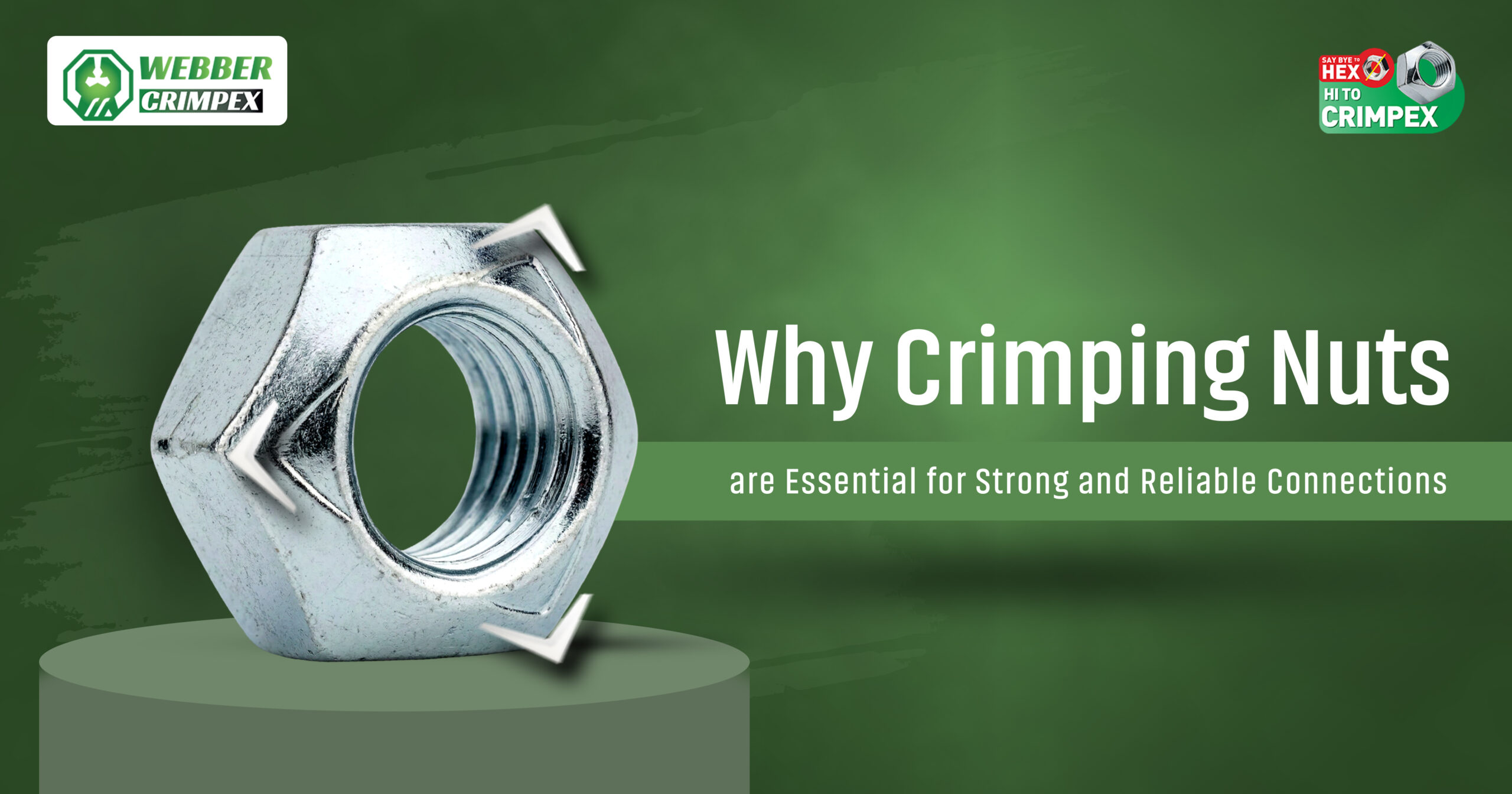
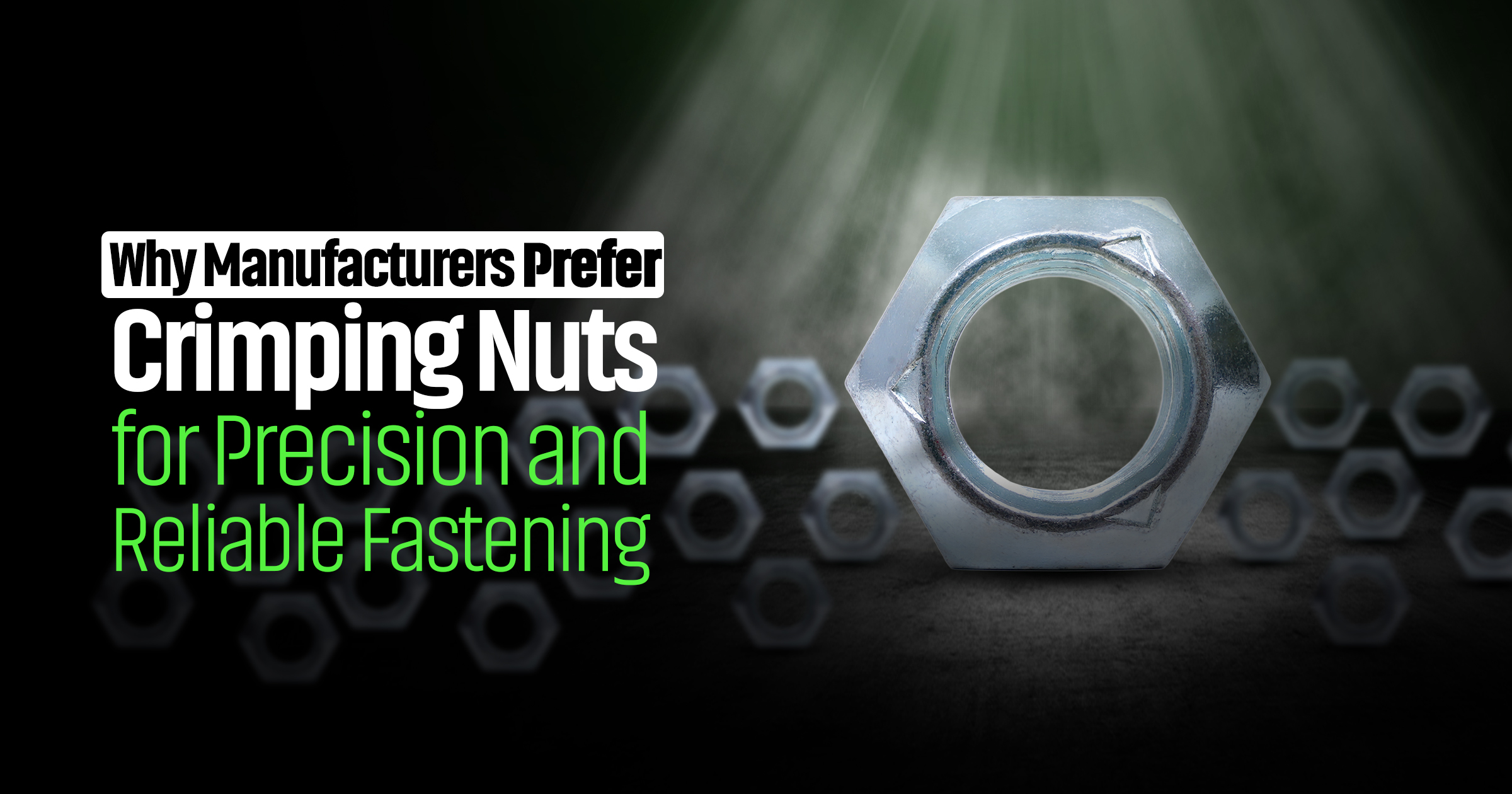
Crimping Nuts are a different type of fastener. It is characterised by a permanently deformed area at the top, which, when engaged with the bolt threads, forms an interference fit that resists back-rotation which is the primary cause of joint failure.
Why Engineers Love this Fastener
1. Thread Engagement Is Locked
Multi-point engagement with the bolt thread by the deformed zone overcomes the single-point friction failure of conventional nuts.
2. No Locking Required
No washers, nylon inserts, or thread locking compounds. The locking action is entirely self-contained.
3. Always Torque Consistent
Crimped nuts ensure the clamping torque is maintained throughout the life of the assembly.
The Need for Vibration Resistant Fasteners
Industrial vibration is relentless. The turning of electric motors and the stroke of oil pumps create minuscule vibrations. Nuts loosen over time, until joint integrity is lost, resulting in electrical issues in power plants, misalignment in cement manufacturing, and structural failures in marine applications.
Crimping fasteners address this issue at the design stage. They do not have a locking feature that wears away under vibration, but become even more effective as the locking zone is forced deeper into the mating bolt, increasing the joint’s integrity with dynamic loads. This translates to 24/7 operations with reduced downtime, maintenance, and overall cost.
Where Crimped Nuts Thrive and Why It Matters
Crimped nuts are often used where the tightening of nuts on thin sheet metal will result in distortion or the stripping out of threads. They provide controlled distortion and tight clamping of a bolt without undue stress on the structure, and are used for electrical housings, automobile brackets, air conditioning, deck plating, and modular industrial equipment.
This characteristic is enhanced by material choice. Stainless steel crimped nuts leverage the mechanical advantages of the crimp to provide chemical resistance to seawater, cement alkalinity, industrial chemicals, and thermal cycling, where carbon steel fails. Joints can be designed to perform throughout the life of the equipment, removing the need for regular re-torquing.
This is the engineer’s ethos for every Webber Crimpex product, designed to perform and selected to last. The company is one of the major bolts and nuts manufacturers in India, serving cement, steel, power, and marine sectors from its base in Coimbatore with a legacy of precision manufacturing.
Final Thought
The advantages of crimped nuts are obvious: resistance to vibration, thin material fastening, corrosion resistance, and self-locking. The transition from conventional fasteners will be a sound investment for procurement professionals and engineers looking to avoid downtime and extend equipment life.
Looking to upgrade your fastener specs? Discover the complete selection of precision crimped nuts, stainless steel fasteners, and custom solutions from Webber Crimpex, designed to endure at webbercrimpex.com
FAQs
- What are the benefits of crimping fasteners over locking nuts?
-
- Crimping fasteners have an interference fit between the nut body and bolt threads, no polymer materials, no sensitivity to temperature variation, and the locking force will not diminish with time. Ideal for vibrating applications.
- Are vibration resistant fasteners resistant to chemicals?
-
- Yes. The locking principle of the stainless steel vibration resistant fasteners is locking, oxidation, moisture, and chemical resistant, and is widely used in marine, cement, chemical, and power plants.
- Why buy from Indian manufacturers rather than imports?
-
- Leading manufacturers in India like Webber Crimpex, are certified, have CNC machining and offer highest quality. Local sourcing eliminates transport time and costs, and provides access to a pool of resident engineers to develop specifications, delivering cost benefits and quality that may not be met by imports.