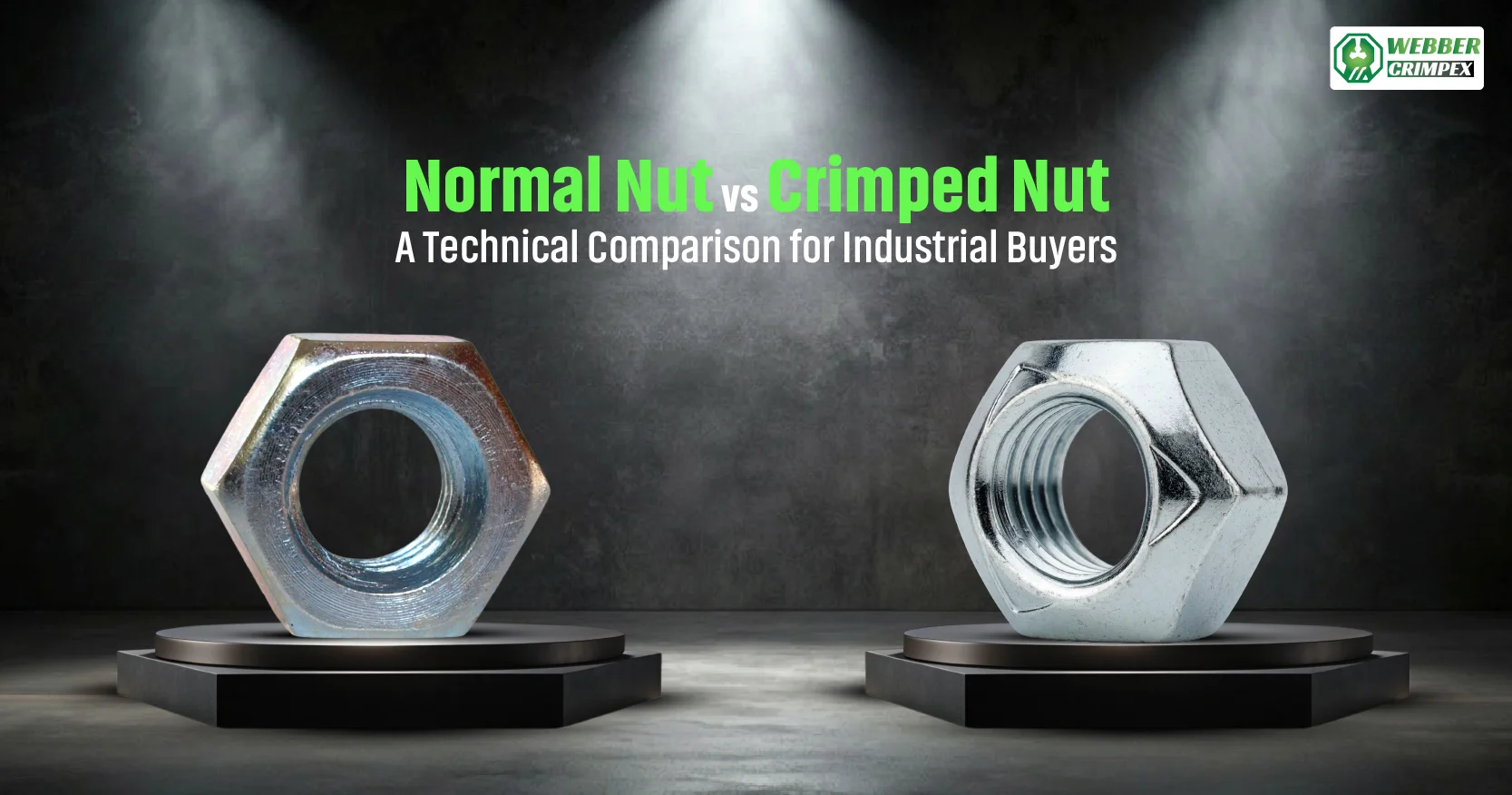
- Normal nuts suit basic assemblies, while crimping fasteners offer stronger locking for demanding applications.
- Vibration resistant nuts prevent loosening of equipment exposed to constant movement.
- Industrial fastening solutions improve equipment safety, durability, and maintenance efficiency.
- Crimped nuts deliver an unyielding grip paired with optimized load distribution for maximum structural integrity.
- Webber Crimpex manufactures fastening components designed for industrial reliability.
Why Choosing the Right Nut Matters
Fasteners may appear simple, but they play a crucial role in maintaining the strength and safety of industrial assemblies. Normal nuts depend on thread tightening to fix components, and they may loosen under vibration or repeated stress.
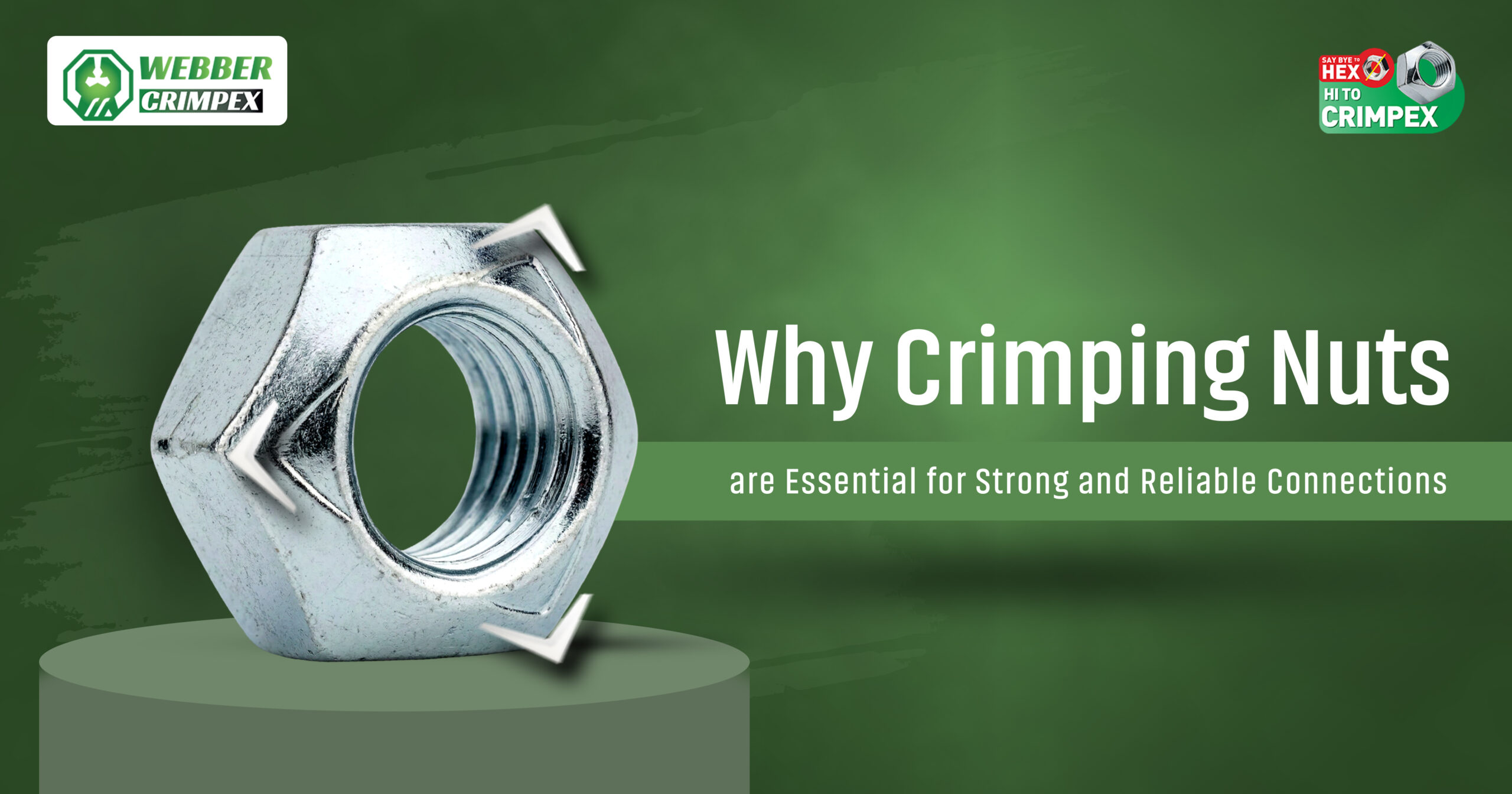
A crimped nut is fixed by deforming a portion of the host material, creating a secure mechanical lock that prevents rotation and provides better stability. Due to this better grip, crimped nuts are used in many industries where quality and durability are paramount.
Crimping Fasteners vs Traditional Nuts: Structural and Performance Differences
In comparing fastening technologies, crimped fasteners offer several structural benefits.
The crimped nuts are installed on sheet metal or thin materials. When installed, the body of the nut is deformed slightly to provide a secure fit, which snaps it into place. This makes the fastener almost a permanently integrated threaded insert.
Conventional nuts, however, work only through thread interaction and torque tightening. When there is a vibration or repetitive movement, friction between the threads can wear away, causing the nut to loosen.
This is a big difference for industrial buyers. Assemblies that are prone to movement (e.g., automotive panels, electrical enclosures, industrial equipment) are better served by crimped fasteners since they do not need secondary tools or locking systems.
Webber Crimpex manufactures these fasteners to precise tolerances to give components greater consistency in installation and stability.
Why Engineers Prefer Vibration Resistant Nuts
Loosening caused by vibration is one of the most frequent causes of mechanical failure. Constant movement may cause a reduction in clamping force between components, which, over time, may cause structural weakness or failure of the component. This is where the vibration resistant nuts come in.
The crimped nuts form a strong mechanical connection to the base material, and the nut does not spin or move loose. Since the nut is directly attached to the structure, the threaded connection is stable even in repeated vibration.
Industries such as: Automotive manufacturing, electrical equipment assembly, manufacturing of industrial machinery, sheet metal fabrication, frequently use fastening in such a way to minimise maintenance.
The implementation of engineered locking mechanisms allows industries to comply with safer and reliable assemblies.
The Expanding Role of Industrial Fastening Solutions in Modern Manufacturing
The modern manufacturing processes require accuracy, effectiveness, and durability. Fastening technologies are forced to keep up with the production speeds and lightness of materials.
Modern industrial fastening solutions dwell upon these three factors:
- Structural stability
- Ease of installation
- Long-term performance
All three requirements are supported by crimped nuts. They also make assembly easier because they do not require the use of supplementary locking washers or adhesives, and enhance the structural integrity of thin materials such as sheet metal.
To industrial purchasers, the selection of the appropriate fastening technology does not simply lie in price, but rather in the number of downtimes, minimum repair, and the quality of the products produced.
Final Thought
To sum up, normal nuts are used when general purposes are met, whereas crimped nuts are used where high durability and vibration resistance are needed. Their secure fit and convenient mounting features make them ideal for contemporary industrial assemblies.
Crimped nuts are precision-engineered to ensure high performance with regard to industry requirements.
Upgrade your fastening system with high-quality crimped nuts from Webber Crimpex for stronger, more reliable assemblies.
FAQs
- What are crimping fasteners? How are they applicable in an industrial setting?
-
- Crimping fasteners are popular in sheet metal assemblies, electrical panels, and machinery where permanent threaded connections are needed without welding or other locking devices.
- How do anti-vibration nuts prevent loosening?
-
- Vibration resistant nuts offer a stable hold, since the crimping procedure secures the nut and does not allow it to rotate and release the thread during movement.
- Are crimped nuts better than traditional nuts?
-
- Crimped nuts tend to have better and more stable fastening than standard nuts in applications that are subject to vibration, thin materials, or repetitive stress.
- Where are industrial fastening solutions typically used?
-
- The fastening solutions are most common in automotive manufacturing, electrical equipment manufacturing, metal fabrication, and heavy machine assembly.
- Is it possible to install crimped nuts in thin sheet metal?
-
- Yes. Crimped nuts are highly specialized towards sheet metal and thin material and offer high threaded connections without damaging the underlying material.